Thursday, October 29, 2009

Sound of Grace Journal, Issue 162, November 2009 now available!

The Sound of Grace Journal, Issue 162, November 2009 is now available from Sound of Grace.

Note that the journal is in PDF format!

Of particular interest to New Covenant Theology is "Thoughts on Continuity and Discontinuity" by John G. Reisinger on page 7.

Wednesday, October 28, 2009

The Reformation: remembering John Calvin and to continue reforming

Whenever we come to this time of year, we remember Luther hammering his 95 Theses against the door of the Wittenberg church on 31 October 1517. This signalled the start of the Reformation. Not long after that, with the Reformation underway at breakneck speed, The Roman Catholic institution wanted to put a stop to the Reformation by stopping Martin Luther.

This they tried through the Diet of Worms which opened on 22 January 1521. Luther was summoned and he appeared before the Diet on 17 April 1521 after he arrived in Worms on 16 April. It is here that he was presented with copies of his books and asked to recant of his views. He was formally asked by Johan Eck if he was willing to retract his statements in those books whereupon Luther asked for a reprieve to consider his answer. He was given a day for consideration and Luther returned on 18 April to give them his answer.

Luther stood before all and said:

"I cannot submit my faith either to the pope or to the councils, because it is clear as day that they have frequently erred and contradicted each other. Unless, therefore, I am convinced by the testimony of Scripture, or on plain and clear grounds of reason, so that conscience shall bind me to make acknowledgement of error, I can and will not retract, for it is neither safe nor wise to do anything contrary to conscience… Here I stand. I can do no other. May God help me. Amen."[1]

johncalvin These events launched the Reformation far and wide. Although Calvin was born in 1509 and 25 years younger than Luther, he was to become one of the greatest reformers. Luther and Zwingli were the men of action in the Reformation while Calvin was a refiner of the doctrines of the Reformation.

Calvin was converted somewhere in 1532. Within four years of his conversion, in 1536, Calvin published the first edition of his Institutes of the Christian Religion, which was initially intended to be a catechism for the French church. After several editions, the final edition was published in 1559, and had become a fully fledged systematic theology.

Apart from his Institutes, Calvin also wrote commentaries on almost every book of the Bible. The significance of Calvin's work must not be underestimated. Calvin was driven by the study of the Bible and to bring glory to God. He effectively laid the foundation of doctrine for the Reformation, and for all subsequent Reformed systematic theologies.

John Calvin was a theologian, pastor, biblical exegete, and tireless apologist for Reformed Christianity, and ranks among the most important thinkers in church history. His theological works, biblical commentaries, tracts, treatises, sermons, and letters helped establish the Reformation as a legitimate and thriving religious movement throughout Europe. No theologian has been as acclaimed or assailed as much as Calvin. Calvinism has spawned movements and sparked controversy throughout the centuries. Wars have been fought both to defend and destroy it, and its later proponents began political and theological revolutions in Western Europe and America. The breadth and depth of the engagement with his works since they first appeared four centuries ago—and their continuous publication since then—testifies to Calvin’s importance and lasting value for the church today. Thinking Christians from the twenty-first century who ignore Calvin’s writings do so at their own peril.[2]

Due to his writing, Calvin became a sought after man. Even though he became so famous, he remained a humble man. He was truly a theologian through and though. He would rather be studying the Bible and writing on theology than be in the limelight. Yet, he remained in the limelight exactly because of his theological writing. Newly reformed Christians everywhere wanted him to teach them.

It was on his planned route to Strasbourg that he planned to simply overnight in Geneva. William Farel, the reformer in Geneva would have none of it. When Calvin explained that he was only interested in private studies and that he really wanted to go to Strasbourg, Farel unleashed upon Calvin a fiery "imprecation that God would curse [Calvin's] retirement and the tranquillity of the studies which [he] sought, if [he] should withdraw and refuse assistance when the necessity was so urgent. By this imprecation [Calvin] was so stricken with terror that [he] desisted from the journey"[3] he had planned to Strasbourg.

It is here in Geneva that Calvin did most of his work.Calvin taught daily and preached several times a week. Even though he was very sickly, he pressed on daily. Calvin was not afraid of work. Concerning this Beza wrote:

"In the year 1562 it might already be seen that Calvin was hastening with rapid strides to a better world. He ceased not, however, to comfort the afflicted, to exhort, even to preach, and to give lectures. The following year his sufferings so increased that it was difficult to conceive how so weak a body, and exhausted as it had been by labor and sickness, could retain so strong and mighty a spirit. But even now he could not be induced to spare himself; for when he was obliged, against his will, to leave the public duties of his office unfulfilled, he was employed at home, giving advice to those who sought him, or wearing out his amanuenses by dictating to them his works and letters. When we besought him to refrain at least during his sickness from dictating and writing, he answered, ‘Would you that the Lord should find me idle when He comes?’ The year 1564 was the first of his eternal rest, and the beginning for us of a long and justifiable grief."[4]

Calvin was not a monster as some want to paint him. Professor Dorner of Berlin wrote:

"Calvin was equally great in intellect and character, lovely in social life, full of tender sympathy and faithfulness to friends, yielding and forgiving towards personal offenses, but inexorably severe when he saw the honor of God obstinately and malignantly attacked. He combined French fire and practical good sense with German depth and soberness."[5]

Calvin's influence soon stretched all the way to England and Scotland with great men such as John Know indebted to the teachings of Calvin. Calvin pressed on in the Reformation. For Calvin there was no day on which could be said that the Reformation had ended. Calvin felt that the church always had to be reforming. In Calvin's mind, the truth had been corrupted and the church had to move back to the purity of Biblical doctrine. He wrote:

"But how deservedly soever we complain that the doctrine of truth was corrupted, and the whole body of Christianity sullied by numerous blemishes, still our censurers deny that this was cause sufficient for so disturbing the church, and, in a manner, convulsing the whole world."[6]

The need for reformation in the church today, as it was in Calvin's day, is great. The evangelical has largely jettisoned its doctrinal base for more cooperation on different levels. Today, more and more evangelical churches are starting to work together with the Roman Catholic institution as can be seen in the Evangelicals and Catholics Together (ECT) movement. The fact that Rome still teaches the heresies of Trent is completely overlooked.

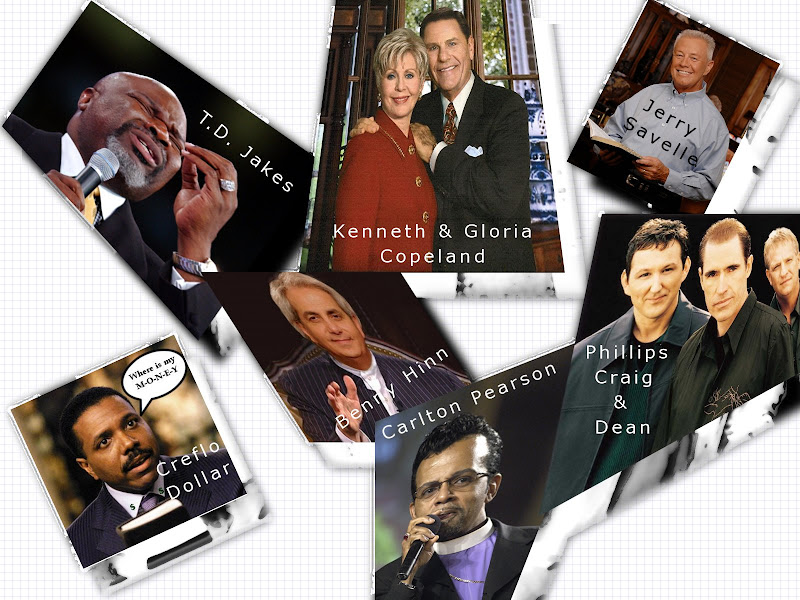
Further, heresies within the evangelical church abound. Listening to Christian radio stations and walking into Christian book stores will attest that fact. The fact that the books and music of heretics such as Copeland, Hinn, Meyer, Jakes and more are so widely accepted into these radio stations and book stores is alarming! This is why the church still needs reformation today.

The church, with its acceptance of heretics into its fold, is making the Reformation of Luther and Calvin's day void! What were the hardships for in those days if the church simply throws it all away. The church finds itself on the edge of a precipice, and it will take very little to push it over the edge. The church has lost its anchor, and does not know its roots.

The church no longer knows its history and those that ignore history are destined to repeat the same failures of the past!

31 October (every year) is Reformation Day. Don't waste it on trivialities such as "helloweeny," but rather go and rent the DVD of Luther so you can at least get a little hint of what was accomplished on behalf of the church!

[1] Cromarty, Jim, A Mighty Fortress is our God: The Story of Martin Luther, Evangelical Press, Darlington, England, 1998, p205.
[2] Calvin500 Website, http://www.calvin500.com/john-calvin/biography/
[3] Lindsay, T.M., The Reformation: A Handbook, The Banner of Truth Trust, Edinburgh, UK, 2006, p75.
[4] CRTA, http://www.reformed.org/calvinism/jc_character.html
[5] Ibid.
[6] Calvin, John, The Necessity of Reforming the Church, http://www.swrb.ab.ca/newslett/actualNLs/NRC_ch04.htm

Tuesday, October 27, 2009

John Piper in South Africa Oct 2010!

Dr. John Piper Finally it is happening! Dr. John Piper will be in South Africa in October 2010 for the Rezolution 2010 conference, God willing, which will be held from 15-17 October 2010 at the Sandton Convention Center, Sandton, Johannesburg.

I know that we must not put men on pedestals, but John Piper's teachings have taught me a lot. God has used him tremendously in the lives of many and also in mine!

When it comes to expository preaching, John has an amazing ability to make the Word of God understandable. I really enjoy the clarity with which he teaches. He is my favourite Bible teacher.

John Piper's heart is set on glorifying God, and that comes through in his preaching, teaching and writing!

You will find his sermon, articles and books online at Desiring God. Many of his sermons are available in writing, audio and video for free. Almost all his books are also online FREE!

I cannot emphasize enough how you will be edified through his teaching, and if possible at all, plan now to attend this conference in October 2010. For me, this is way more important for South African Christians than having the World Cup Soccer in South Africa next year. In fact, the soccer is trivial compared to this.

For those on Facebook, the Rezolution2010 Conference also has a Facebook group!

Monday, October 19, 2009

You have to hate someone a lot not to tell them about Jesus

This is the theme of Kevin DeYoung's latest blog post called How Much Do You Have to Hate Somebody to Not Proselytize?

That is a real question for those people who claim to be Christians, yet do not believe or practice what the Bible teaches. However, it is just as much a real question to those who believe the Bible, yet do not practice its teachings.

If Christians, as the people of God, have the only message of salvation, how much responsibility do we not have to tell a world destined for hell about that message of hope and salvation.

But then, we will have to truly believe that their lives are in peril. The question is, how much do we truly believe the Bible when it speaks of the horrors of hell? Are we really convinced that people will go to hell if they do not believe in Christ? I suppose our actions declare our true convictions!

If we do believe what the Bible teaches on eternity, the question whether we love our hell-destined neighbours or not will then clearly come into focus. If we do love our neighbours as much as we claim we do, would we not prove that by taking the only message of salvation to them, in order for them to meet the Lord of life, the King of kings and Lord of lords, Jesus Christ? Would we not do this so that they would escape the fires of hell, at least?

Or, do we hate our neighbours that much that we would rather see them burning in hell before we give them the life altering, soul saving message of Jesus Christ?

The question is, where do you fit in?

Monday, October 12, 2009

Wednesday, October 07, 2009

Top 15 Must Have Books On Apologetics

Michael Patton wrote a blog post on the Top Fifteen Must Have Books on Apologetics.

There are some good books in the list he gives.

Are there any books you would exclude/include?

Friday, October 02, 2009

For whom the Bell tolls, it tolls for 'evanjellycals'

Evanjellycals, they are everywhere. With men like Rob Bell around, the bell is really tolling for 'evanjellycals.' The term 'evangelical' has completely lost its meaning, and Mr. Bell is not helping the situation at all. Phil Johnson has written a short commentary on Bell's latest interview with The Boston Globe, and well, it seems Mr. Bell is a real evanjellycal clown comedian!

Thursday, October 01, 2009

Ever thought of the nature of God?


I have recently overhauled my website, Sovereign Truth. As time permits I am adding new articles there. The latest article is called Theology Proper. It is published under the category of Theology/Systematic Theology. I have also published some articles under the category of Theology/Against Heresies. Further, I also published articles under the general category of Studies, which itself also has several other sub-categories.

Anyway, here is a blurp on the article, Theology Proper:
"The great presupposition of theology is the existence of God. Why bother with theology unless we assume that God exists. Even though the existence of God is accepted by faith, faith is based on reliable information. The faith that we have of the existence of God is not a blind faith, but a faith that is based on evidence that stands upon Scripture. Is the Bible reliable as evidence? That can only be answered as one studies the subject of Bibliology. The Bible does not start out with the purpose of proving the existence of God. Rather, it assumes the existence, and gives us His-Story (history) concerning His dealings with man, in effect salvation history."
Come visit Sovereign Truth. I am sure there is something that you might enjoy! I also have a poll that you can answer. The current poll wants to know: How important is theology to you?

Wednesday, September 30, 2009

DesiringGod 2009 Calvin Conference now available online!

The DesiringGod 2009 National Conference on John Calvin is now online. The conference is available in written, audio and video!

So, without wasting any more time, visit the conference page and read, listen or watch to our heart's content!

HT: Frank Turk

Monday, September 21, 2009

Between Two Worlds has moved

Between Two Worlds, the blog by Justin Taylor, previously here, has moved. It is now a blog at the Gospel Coalition. If you subscribed to his blog feed before, you will need to subscribe to his new feed.

Happy blogging Justin!

Thursday, September 17, 2009

Darwin: The Voyage that Shook the World (trailer)

Creation Ministries International (CMI) has released their long awaited DVD, The Voyage that Shook the World. To order the DVD, simply visit CMI's store.

From The Voyage's website:
"In 1831 a young amateur scientist, Charles Darwin, boarded HMS Beagle on an epic five-year voyage of discovery. His observations and later reflections resulted in a book that profoundly impacted the world.

"2009 marks the 200th anniversary of Darwin’s birth and the 150th anniversary of the publication of his ‘Origin of Species’. The Voyage that Shook the World retraces Darwin’s journey, exploring the places and discoveries crucial to the formulation of his Theory of Evolution.

"Filmed in South America, the UK, North America, Australia and Europe, The Voyage features dramatic period recreations and stunning nature cinematography interwoven with scholars sharing their perspectives on the man and the controversy.

"A fascinating and thought provoking opportunity to gain new insight into
The Voyage that Shook the World."

Here is the trailer:

Wednesday, September 09, 2009

We must think and proclaim God's truth

"God's words are not simply true in the sense that they conform to some standard of truthfulness outside of God. Rather, they are truth itself; they are the final standard and definition of truth. So, Jesus can say to the Father, 'Your word is truth' (John 17:17). What can be said about the truthfulness of God's knowledge can also be said about God's words, for they are based on his perfect knowledge and accurately reflect that knowledge: God's words are 'truth' in the sense that they are the final standard by which truthfulness is to be judged: whatever conforms to God's own words is true, and what fails top conform to his words is not true...

"In fact, as we begin to think true thoughts about God and creation, thoughts that we learn from Scripture and from allowing Scripture to guide us in our observation and interpretation of the natural world, we begin to think God's own thoughts after him! We can exclaim with the psalmist, 'How precious to me are your thoughts, O God! How vast is the sum of them!' (Ps. 139:17)"
Wayne Grudem, Systematic Theology: An Introduction to Biblical Doctrine, IVP, Leicester, England, 1994, p196
When you think of God's truth, what comes to mind? Is it something that you deem important, or is it something that you can set aside for the so-called "greater good?" Of course, you will have to ask yourself what the "greater good" is! If it is anything other than the glory of God, then the "greater good" is no good at all. If the "greater good" is anthropocentric, meaning that we have to make the church look good in the eyes of the world, then you see the "greater good" purely through uninformed human eyes!

The first question of the Westminister Shorter Catechism asks the question: "What is the chief end of man?" In plain modern English for those who don't know what this question means: "What is the ultimate purpose of man?" The answer? "Man’s chief end is to glorify God, and to enjoy him forever."

The greater good must always be to glorify God. We must always see glorifying God as the ultimate good. How does this relate to believing and proclaiming the truth?

When we disregard the truth of the gospel, we disregard the glory of God! The glory of God is inherent to who He is. The fact is that truth is also inherent to God. The way we handle God's truth says a lot about us.

Our faith and truth go hand in hand. If our faith is not based on truth, then we believe a lie and our faith is not based on the one true God! We can claim all kinds of relationships and warm fuzzy feelings, but it remains a lie!

God's truth is not something to be fudged to make it more accommodating to people. Where God's truth speaks of His love, we shouldn't make it look other than it is. On the other hand, where God's truth speaks of His wrath, we shouldn't make it easier than it really is. Where the gospel brings offense, we must not lighten the offense. The gospel is an offense to the world as it is. When we work to remove the offense of the gospel, we no longer have the gospel. God's truth diminished, is no truth at all!

As a result, we must hold to ALL God's truth, not just what we prefer to believe.

For more on the importance of truth to God, I have written enough to show how we need to resist error in the church and how we need to stand for the WHOLE truth of God.

Friday, September 04, 2009

Sound of Grace Journal for September now online!

The Sound of Grace Journal for September 2009 is now online!

The contents of this issue are a follows:
Studies in Galatians—Part Twenty-Seven - John G. Reisinger
Become What You Are - A. Blake White
Total Depravity, Total Grace - Steve West
The Beginning and the End - Mike McInnis
The Atonement - John G. Reisinger
The Difference Betwixt the Law and the Gospel - Ralph Erskine

The Old Covenant died with Christ

What does the New Testament mean when it speaks of the Old Covenant? Does it mean an earlier half of the current covenant that is in effect right now? Is it simply an older administration of one covenant that includes an old administration and a new administration of an overarching covenant that is currently in effect? Is it a covenant that was made with Adam and fell away with the covenant that started with Moses?

You see, when you create a double language for things that exist already and change the terms that have already been used by the Bible by giving it new meaning, then you land in foreign territory. The Bible calls the covenant that started with Moses the Old Covenant (not the Old Administration) and the covenant that started with Jesus the New Covenant. By calling the Old Covenant the “old administration” and the New Covenant the “new administration” under one covenant, truth is discarded. By reading the epistle to the Hebrews it is clear that the Bible calls the covenant that was established under Moses with its attendant law, the Ten Commandments, the Old Covenant. It also calls the covenant established by Christ, the New Covenant. So, when it calls the Old Covenant obsolete, it speaks of the covenant that was established with Israel at Mt Sinai.

Ten Commandments

When we speak of the Old Covenant, it becomes almost impossible to separate it from the Ten Commandments. Making a division between the Old Covenant and the Ten Commandments is purely artificial.

What is really interesting about the phrase “Ten Commandments” is that it is only found three times in the Bible (Ex 34:27-28; Dt 4:13; Dt 10:4).

In Ex 34:28 and in Dt 4:13 the Ten Commandments are called the words of the covenant. In Ex 34:28, the Ten Commandments are called “the words of the covenant” and in Dt 4:13, the Ten Commandments are called the covenant itself. The Bible, which is quite able to speak for itself, has established in its own words (the words of God) that the Ten Commandments are the words of the covenant, even the covenant itself. The Ten Commandments are the legal terms of the covenant. Hence, the terms “Ten Commandments,” “covenant” and “words of the covenant” are equivalent terms. By trying to separate these terms from one another and inserting new meaning into them, some have emptied these words of their Biblical, God-given meaning and supplanted these words with non-Biblical meaning. When we do this, do we really believe in Sola Scriptura and the inerrancy of the Bible? Therefore, if we are to use the Bible to speak for itself, we have to conclude that the Ten Commandments are the distinct legal covenant document of the Old Covenant established under Moses (Dt 9:9-11).

What do we learn from Moses’ re-declaration of the Ten Commandments in Dt 5:1-22? We learn, that in fact, Moses made a re-declaration of the covenant that God made with Israel at Horeb. What was this covenant? Once you read this passage you quickly realise that the re-declaration of the covenant is nothing more than the Ten Commandments! The Ten Commandments is the covenant!

What we further learn from the “Ten Commandments” language is that the covenant was made with the nation of Israel alone! (Ex 34:27; Dt 4:13; Dt 5:2-3; 1 Ki 8:9). 2 Chr 6:11 tells us that the covenant, the Ten Commandments written on two tablets of stone, was in the Ark of the Covenant, a covenant that the Lord “made with the people of Israel.” Of course, this passage does not stand alone. In Ex 34:27 the Lord told Moses that in accordance with the words written in the Ten Commandments, the Lord had made a covenant with Israel. Dt 5:2-3 is even more clear. Here Moses declares to Israel that the covenant God had made with them at Horeb was a covenant with them and no one else. To press this point home, in verse 3, Moses makes it clear that even their forefathers were excluded from this covenant. “This covenant is with you! Not with your great-grand-pappy, but with you!”

Did you know that there are two versions of the Ten Commandments, the so-called unchanging, eternal moral law of God, in the Bible (Ex 20:1-17; Dt 5:1-22)? If you did not know that, then it is time you re-read these two passages that declare the Ten Commandments. Seeing that a lot has been written about this already, I will let John Reisinger explain it here!

A question we have to ask ourselves is whether the Old Covenant, of which the Ten Commandments were the legal covenant document, was a covenant of grace. Of course, God showed Israel tremendous favour when He delivered them from the clutches of the Egyptians, but does that act translate to the Old Covenant being a covenant of grace? The fact is that this deliverance was merely a physical deliverance, not a spiritual redemption! No, the covenant made with Israel, of which the Ten Commandments were the words of the covenant, was a conditional, legal, works based covenant which demanded obedience for its promised blessings, and curses for disobedience. Ex 19:5-6 clearly informs us that Israel as a treasured possession of God would only remain so “if you will indeed obey my voice and keep my covenant.” Dt 28:1-68 is even more devastating than the Ex 19 passage! (“if you faithfully obey the voice of the LORD your God, being careful to do all his commandments that I command you today…all these blessings shall come upon you and overtake you…if you will not obey the voice of the LORD your God or be careful to do all his commandments…then all these curses shall come upon you and overtake you…”)

The Ten Commandments were given to an unregenerate people as a legal covenant of blessings and curses, life and death. Israel was a nation of sinners with a small remnant of regenerate believers. Just because God was gracious in giving the covenant, to establish the physical nation of Israel as His people if they obeyed, does not mean that the covenant itself was gracious! Israel’s’ special national status as God’s people was conditional on keeping (or breaking) the Ten Commandments. We know that Israel did not keep the covenant and was eventually cast off as God’s special people (Ex 19:5-6) and we know from 1 Pet 2:9 that the church inherits those very blessings since Christ has kept the covenant in her place.

Synonyms for the Ten Commandments

There are at least five synonyms of the Ten Commandments used in the Bible.

The Ten Commandments, as the summary document under which Israel’s covenant status was established, are sometimes called the “tablets of stone” (Ex 24:12). The “tablets of stone” contained God’s conditional covenant that Israel had to perform (Dt 4:13). The phrase “tablets of stone” is interchangeable with the word “covenant.” This covenant written on tablets of stone is inferior to the covenant written on the heart (2 Cor 3:3).

The Ten Commandments are also known as the “tablets of testimony” (Ex 31:18; 34:29).

The phrase “the testimony” is used more often than any other term or phrase as a synonym for the Ten Commandments (Ex 25:16-17; 40:20). What is interesting about this synonym is that it is a singular term, referring to the Ten Commandments as a covenant document. While the Ten Commandments are also called “testimonies” (Dt 4:45), the Ark of the Covenant is never referred to as the “ark of the testimonies” but to the “Ark of the Testimony” (Ex 25:22), referring to the singular nature of the covenant document in the Ark.

The Ten Commandments are also known as the “words of the covenant” (Ex 34:28), the covenant document of the Old Covenant that God made with Israel, and this was referred to earlier.

Finally, the Ten Commandments are also known as the “tablets of the covenant” (Dt 9:9-15). The entire sacrificial system revolved around the tablets of the covenant, the Ten Commandments (Heb 9:4). The relationship of Israel’s worship and the sacrificial system of the Old Testament were intricately related to the Ten Commandments. All of Israel’s worship with all its sacrifices and laws, rested on the centrality of the Ten Commandments, the “tablets of the covenant.” Without these tablets, and the very “words of the covenant” that were inscribed on them, Israel’s system of worship would have been worthless.

All Old Testament laws became part of the Old Covenant

While the Ten Commandments, clearly portrayed as the “words of the covenant,” were housed inside the Ark of the Covenant as the concise, constitutional law of the covenant, the “book of the covenant” (Jer 34:13-20; 2 Ki 23:21) which were the interpretation and application of the Ten Commandments, lay next to the Ark of the Covenant.

This “book of the covenant,” although separate from the “tablets of the covenant,” was a part of the Old Covenant too. While the Ten Commandments are the summary document of the Old Covenant, the “book of the covenant” is the detailed laws of the Old Covenant. Very much like a constitution and the laws that derive from that constitution. The division of the covenant into moral, civil and ceremonial laws are spurious at best. Jer 34:13-20 makes it clear that these aforementioned so-called divisions of the law, were all considered part of the law of Moses, the Old Covenant.

The “sign” of the Old Covenant

It was customary in Old Testament times for the sign of the covenant to be included in the document that carried the covenant. In the same way, the Old Covenant document, the Ten Commandments, contains its own sign of the covenant.

The sign of the Old Covenant, contained in the “words of the covenant” is the Sabbath (Ex 31:12-18)! In verse 16 we learn that “the people of Israel shall keep the Sabbath, observing the Sabbath throughout their generations, as a covenant forever.” Since the Sabbath was the sign of the covenant, the Sabbath stood for the whole of the covenant. Breaking the sign of the covenant, the Sabbath, meant breaking the covenant itself. And when the sign of the covenant was violated, it meant that that person renounced the covenant relationship and only the death penalty was good enough for that violation (Num 15:32-36).

The covenant was made only with Israel, as we learnt from Dt 5:2-3, and the sign of the covenant, the Sabbath, was given to Israel alone. Ex 31:16-17 makes this very clear: “Therefore the people of Israel shall keep the Sabbath… It is a sign forever between me and the people of Israel.” The heart of the Sabbath was to refrain from work and whoever “does any work on the Sabbath day shall be put to death” (Ex 31:15). The Sabbath was essentially about work and not worship. Ez 20:11-20 backs Moses up that the Sabbath is the sign of the covenant and that it was made with Israel. Here God pronounced His wrath on Israel because they did not keep God’s Sabbaths, making those Sabbaths just as holy as the seventh day Sabbath.

This is important since Col 2:12-17 says that we should not let anyone “pass judgment on you in questions of food and drink, or with regard to a festival or a new moon or a Sabbath. The question, of course, is whether the Sabbath (“a Sabbath”) mentioned in verse 16 includes the seventh day Sabbath. “These are a shadow of the things to come, but the substance belongs to Christ.” (vv16-17) The death that Christ died, the curse that He lifted, was not to relieve us from ceremonial laws, so we could eat bacon, but “canceling the record of debt that stood against us with its legal demands” (v14), the Ten Commandments. What law, or “record of debt,” stood between God and us? Surely you can see that it was not the ceremonial laws, but rather the Ten Commandments! The fact that Paul tells us in verse 13 that “God made [us] alive together with him, having forgiven us all our trespasses,” is clear evidence that what Paul had in mind was salvation, and that mere deliverance from ceremonial laws was not what Paul had in mind here, hence, “the record of debt that stood against us with its legal demands” is the Ten Commandments. The basis of our forgiveness is not the removal of any ceremonial or civil laws, but the law that condemns to death, the Ten Commandments.

The list of Sabbaths that Paul refers to here in Colossians is a known list. In Lev 23, the Lord gave Moses the appointed feasts, “holy convocations” in the ESV (“sacred assemblies” in the NIV). This seems to be the only place in Scripture where we can find a list of “Sabbaths.” What is most important about this list of “Sabbaths” is that the very first one mentioned is the seventh day Sabbath. It is rather clear that Paul would have known about this passage, and it is most likely that this is the very passage that Paul alluded to in Col 2. With the seventh day Sabbath making it to the top of this list, it is not possible to separate it from the rest of the Sabbaths. Each of these Sabbaths included the main requirement of the seventh day Sabbath, no work. That means that all these Sabbaths, the seventh day Sabbath included, are similar in nature.

The Ark of the Covenant

The Ark of the Covenant was so named because the Ten Commandments, the covenant document was housed inside (Ex 25:16; Ex 40:19-20; Dt 10:1-5). The ark of the covenant facilitated sacrificial ministry the Ten Commandments demanded (Heb 9:1-4). Without the Ten Commandments in the ark, the sacrificial system of the Old Covenant would have been based on nothing, since God based it all on His law for the Old Covenant, the Ten Commandments.

Entrance to the presence of the Ark of the Covenant spelt death to anyone until the demands of the tablets of the covenant were fully met. It is for this reason that only the high priest could enter only once a year into the most holy place with sacrificial blood. The demands of the law could only be satisfied by blood, since human beings are incapable of keeping the law perfectly.

The Covenant Document had a Definite Beginning and End

The distinct legal covenant document of the Old Covenant, the Ten Commandments, had its definite beginning on Mt. Sinai when God gave it to Moses (Ex 31:18) to deliver it to Israel with whom alone this covenant was given (Dt 5:2-3). The fact that this covenant, the Ten Commandments (Dt 4:13), was made with Israel alone and not with their forefathers, shows that the Ten Commandments as a covenant document did not exist before, but was established here at Sinai.

Since the first covenant, the Old Covenant, was a covenant of death and “if that first covenant had been faultless, there would have been no occasion to look for a second.” (Heb 8:7) As a result, the Old Covenant ended with the death of Jesus as our sacrifice. So, “In speaking of a new covenant [not a new administration of an existing covenant], he makes the first one obsolete.” (Heb 8:13) It is in Christ’s death that we are redeemed from the curse of the Law (Gal 3:3-14), the same Law that was abolished in Christ (Eph 2:15).

From this we learn that in the abolishment of the Law and the Old Covenant, the Ten Commandments have served out their purpose as the distinct legal document of the Old Covenant. However, in saying that the Ten Commandments have come to an end, it does not mean that that we can now kill and steal. What it does mean is that we are no longer under the Ten Commandments as a legal document that stands against us. It is not the individual commandments that have been done away with, but the legal document, the covenant document, the tablets of stone. The only commandment that no longer exists is the Sabbath commandment. With the covenant being made obsolete, there is no longer any need to perform this duty, as it was the sign of that old covenant, and without a covenant, the sign has become unnecessary! The fact is that the Sabbath commandment started at Sinai and ended with the death of Christ. No one was ever punished for breaking the Sabbath command before it was given as a commandment at Sinai. Before Sinai, people were punished for all the other commandments, just not for the Sabbath. In the New Testament, all commands have been repeated in one form or another, except the Sabbath command. The Ten Commandments, the Law, as a legal covenant document has ended and is no longer our guardian because Christ has come and we are justified by faith (Gal 3:24-25). The Old Covenant, with its covenant document, the Ten Commandments also came to an end because the priesthood changed (Heb 7:12).

Christ instituted a new covenant “by canceling the record of debt that stood against us with its legal demands” (Col 2:14). By dying as a ransom and propitiation under the Old Covenant, the resurrected Christ became the mediator of a New Covenant (Heb 9:15). Christ fulfilled the demands of the Old Covenant on our behalf and has inaugurated a New Covenant in which His blood was shed once for all.

For more on New Covenant Theology, go to NCT Friday: Introduction.

Friday, August 21, 2009

Ever heard those stories about Calvin killing Servetus?

To bring some balance and historical truth to the mythical nature of Calvin killing Servetus, James Swan put together a list of interviews concerning John Calvin by Calvin experts. These interviews are in MP3 format and free for download.

Go to Calvin and Servetus Revisited to find out more.


Related Posts Widget for Blogs by LinkWithin