
Whenever we come to this time of year, we remember Luther hammering his 95 Theses against the door of the Wittenberg church on 31 October 1517. This signalled the start of the Reformation. Not long after that, with the Reformation underway at breakneck speed, The Roman Catholic institution wanted to put a stop to the Reformation by stopping Martin Luther.
This they tried through the Diet of Worms which opened on 22 January 1521. Luther was summoned and he appeared before the Diet on 17 April 1521 after he arrived in Worms on 16 April. It is here that he was presented with copies of his books and asked to recant of his views. He was formally asked by Johan Eck if he was willing to retract his statements in those books whereupon Luther asked for a reprieve to consider his answer. He was given a day for consideration and Luther returned on 18 April to give them his answer.
Luther stood before all and said:
"I cannot submit my faith either to the pope or to the councils, because it is clear as day that they have frequently erred and contradicted each other. Unless, therefore, I am convinced by the testimony of Scripture, or on plain and clear grounds of reason, so that conscience shall bind me to make acknowledgement of error, I can and will not retract, for it is neither safe nor wise to do anything contrary to conscience… Here I stand. I can do no other. May God help me. Amen."[1]

Calvin was converted somewhere in 1532. Within four years of his conversion, in 1536, Calvin published the first edition of his Institutes of the Christian Religion, which was initially intended to be a catechism for the French church. After several editions, the final edition was published in 1559, and had become a fully fledged systematic theology.
Apart from his Institutes, Calvin also wrote commentaries on almost every book of the Bible. The significance of Calvin's work must not be underestimated. Calvin was driven by the study of the Bible and to bring glory to God. He effectively laid the foundation of doctrine for the Reformation, and for all subsequent Reformed systematic theologies.
John Calvin was a theologian, pastor, biblical exegete, and tireless apologist for Reformed Christianity, and ranks among the most important thinkers in church history. His theological works, biblical commentaries, tracts, treatises, sermons, and letters helped establish the Reformation as a legitimate and thriving religious movement throughout Europe. No theologian has been as acclaimed or assailed as much as Calvin. Calvinism has spawned movements and sparked controversy throughout the centuries. Wars have been fought both to defend and destroy it, and its later proponents began political and theological revolutions in Western Europe and America. The breadth and depth of the engagement with his works since they first appeared four centuries ago—and their continuous publication since then—testifies to Calvin’s importance and lasting value for the church today. Thinking Christians from the twenty-first century who ignore Calvin’s writings do so at their own peril.[2]
Due to his writing, Calvin became a sought after man. Even though he became so famous, he remained a humble man. He was truly a theologian through and though. He would rather be studying the Bible and writing on theology than be in the limelight. Yet, he remained in the limelight exactly because of his theological writing. Newly reformed Christians everywhere wanted him to teach them.
It was on his planned route to Strasbourg that he planned to simply overnight in Geneva. William Farel, the reformer in Geneva would have none of it. When Calvin explained that he was only interested in private studies and that he really wanted to go to Strasbourg, Farel unleashed upon Calvin a fiery "imprecation that God would curse [Calvin's] retirement and the tranquillity of the studies which [he] sought, if [he] should withdraw and refuse assistance when the necessity was so urgent. By this imprecation [Calvin] was so stricken with terror that [he] desisted from the journey"[3] he had planned to Strasbourg.
It is here in Geneva that Calvin did most of his work.Calvin taught daily and preached several times a week. Even though he was very sickly, he pressed on daily. Calvin was not afraid of work. Concerning this Beza wrote:
"In the year 1562 it might already be seen that Calvin was hastening with rapid strides to a better world. He ceased not, however, to comfort the afflicted, to exhort, even to preach, and to give lectures. The following year his sufferings so increased that it was difficult to conceive how so weak a body, and exhausted as it had been by labor and sickness, could retain so strong and mighty a spirit. But even now he could not be induced to spare himself; for when he was obliged, against his will, to leave the public duties of his office unfulfilled, he was employed at home, giving advice to those who sought him, or wearing out his amanuenses by dictating to them his works and letters. When we besought him to refrain at least during his sickness from dictating and writing, he answered, ‘Would you that the Lord should find me idle when He comes?’ The year 1564 was the first of his eternal rest, and the beginning for us of a long and justifiable grief."[4]
Calvin was not a monster as some want to paint him. Professor Dorner of Berlin wrote:
"Calvin was equally great in intellect and character, lovely in social life, full of tender sympathy and faithfulness to friends, yielding and forgiving towards personal offenses, but inexorably severe when he saw the honor of God obstinately and malignantly attacked. He combined French fire and practical good sense with German depth and soberness."[5]
Calvin's influence soon stretched all the way to England and Scotland with great men such as John Know indebted to the teachings of Calvin. Calvin pressed on in the Reformation. For Calvin there was no day on which could be said that the Reformation had ended. Calvin felt that the church always had to be reforming. In Calvin's mind, the truth had been corrupted and the church had to move back to the purity of Biblical doctrine. He wrote:
"But how deservedly soever we complain that the doctrine of truth was corrupted, and the whole body of Christianity sullied by numerous blemishes, still our censurers deny that this was cause sufficient for so disturbing the church, and, in a manner, convulsing the whole world."[6]
The need for reformation in the church today, as it was in Calvin's day, is great. The evangelical has largely jettisoned its doctrinal base for more cooperation on different levels. Today, more and more evangelical churches are starting to work together with the Roman Catholic institution as can be seen in the Evangelicals and Catholics Together (ECT) movement. The fact that Rome still teaches the heresies of Trent is completely overlooked.
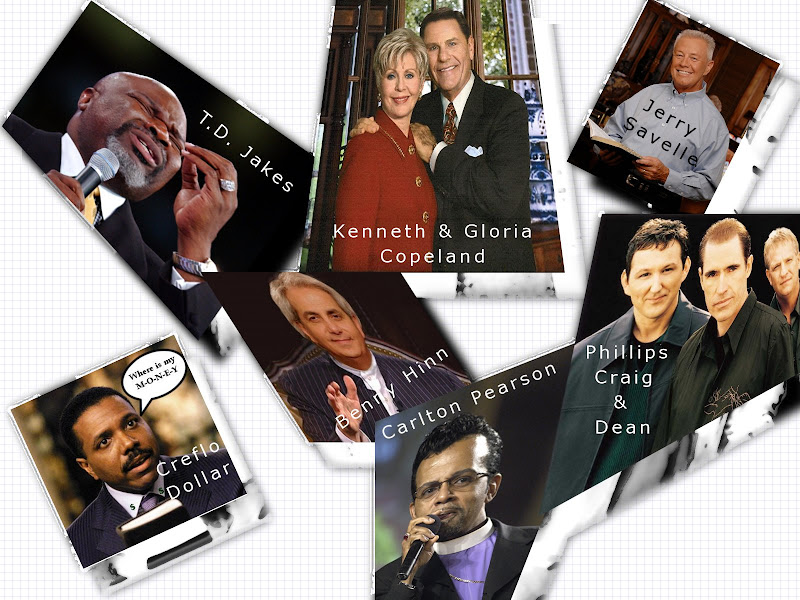 Further, heresies within the evangelical church abound. Listening to Christian radio stations and walking into Christian book stores will attest that fact. The fact that the books and music of heretics such as Copeland, Hinn, Meyer, Jakes and more are so widely accepted into these radio stations and book stores is alarming! This is why the church still needs reformation today.
The church, with its acceptance of heretics into its fold, is making the Reformation of Luther and Calvin's day void! What were the hardships for in those days if the church simply throws it all away. The church finds itself on the edge of a precipice, and it will take very little to push it over the edge. The church has lost its anchor, and does not know its roots.
The church no longer knows its history and those that ignore history are destined to repeat the same failures of the past!
31 October (every year) is Reformation Day. Don't waste it on trivialities such as "helloweeny," but rather go and rent the DVD of Luther so you can at least get a little hint of what was accomplished on behalf of the church!
[1] Cromarty, Jim, A Mighty Fortress is our God: The Story of Martin Luther, Evangelical Press, Darlington, England, 1998, p205.
[2] Calvin500 Website, http://www.calvin500.com/john-calvin/biography/
[3] Lindsay, T.M., The Reformation: A Handbook, The Banner of Truth Trust, Edinburgh, UK, 2006, p75.
[4] CRTA, http://www.reformed.org/calvinism/jc_character.html
[5] Ibid.
[6] Calvin, John, The Necessity of Reforming the Church, http://www.swrb.ab.ca/newslett/actualNLs/NRC_ch04.htm


