The book by William Young, The Shack, is selling like hot cake. Yet, is that a good thing?
Read this review by Gary Thomas.

Friday, August 08, 2008


Thursday, August 07, 2008
Join New Apologetics blog
For those that are keen apologists, here is your chance to join an apologetics blog and to put your brilliant thinking to work. However, you will have to read the requirements first.
Go to The Biblical Thinker Blog and see if you will fit in!
Go to The Biblical Thinker Blog and see if you will fit in!
Wednesday, August 06, 2008
Illegitimate Totality Transfer
At Theological Word of the Day, they have a phrase called Illegitimate Totality Transfer.
The meaning is given as:
This even appears in Bible translations. A specific translation comes to mind... the Amplified Bible. I have another name for it... the Multiple Choice Bible.
The meaning is given as:
"In biblical interpretation, this refers to the illegitimate transfer of a word’s total possible meaning, with all its variations and nuances, and forcing them all into a particular context. For example, if one were to do a word study on the Greek word phile, one would find that it could mean “affection, friendship, love, or kiss.” The context must decide. The illegitimate totality transfer occurs when one forces all of these meanings into one passage, without consideration of which nuance best fits the context. This is a common interpretive fallacy."
This even appears in Bible translations. A specific translation comes to mind... the Amplified Bible. I have another name for it... the Multiple Choice Bible.
Less marriage, less church
Interesting study on the relation between marriage and church attendance:
Continue reading Devon Williams' article, "As Marriage Declines, Church Attendance Falls", here.
"Brad Wilcox, an associate professor of sociology at the University of Virginia, said the biggest factor driving the decline in church attendance is delayed marriage.
"'Marriage is a gateway into family life, and family life, in turn, is often a gateway into church attendance,' he said. 'The longer people postpone marriage, the less likely they are to attend church at a given age, and also the less likely they are to attend church down the road.'"
Continue reading Devon Williams' article, "As Marriage Declines, Church Attendance Falls", here.
Tuesday, August 05, 2008
Son of top Hamas leader converts to Christianity
"Masab Yousef, son of West Bank Hamas leader Sheik Hassan Yousef, revealed for the first time in an exclusive interview with Haaretz newspaper that he has left Islam and is now a Christian. Prior to the interview’s publication last Thursday, Yousef’s family did not know of his faith conversion even though he is in regular contact with them.
'[T]his interview will open many people's eyes, it will shake Islam from the roots, and I'm not exaggerating,' Yousef, who now resides in the United States, said. 'What other case do you know where a son of a Hamas leader, who was raised on the tenets of extremist Islam, comes out against it?'"
To find out more, continue reading here.
Saturday, August 02, 2008
Worship Matters: A Review
 When it comes to book reviews, you will soon realise that I am no professional book reviewer.
The book I am reviewing here is:
TITLE: Worship Matters: Leading Others to Encounter the Greatness of God
AUTHOR: Bob Kauflin
PUBLISHER: Crossway Books, Wheaton, Illinois
YEAR: 2008; first printing 2008.
ISBN-10: 1-58134-824-X
ISBN-13: 978-1-58134-824-8
After reading Bob's blog post Free Copy of Worship Matters for Twenty Bloggers, I decided to "apply" for this rare opportunity to read a book about worship from a Reformed-Charismatic perspective. I have read my share of worship books from the ordinary, run-of-the-mill, charismatic authors, but never one by a reformed worship leader. Well, Bob chose me as one of the reviewers for his new book, and I hope that I do his book justice.
Worship Matters is divided into four parts:
Part One: The Leader
Part Two: The Task
Part Three: Healthy Tensions
Part Four: Right Relationships
Throughout the book Bob gives practical examples from his own life and his ministry in worship. His examples do not only include the good stuff, but also point out how, in his own life, he at times messed up in his worship ministry, and how he, through the work of the Lord in his life, got things back on track.
What I do like about this book, is the fact that it is not a manual on how to get the people in the pews all hyped up so that they could feel like they are praising and worshipping God. Bob brings the concept of worship back to basics. For too long the modern church has made singing on Sundays the only barometer of a person's or a church's level of worship. Bob uses the Bible to show that singing is only a part of worship. Worship is far broader than that! Worship includes everything in our lives, from the time we wake up till the time we go back to sleep. True worship is doing all things to the glory of God. Worship is not really about getting, but about giving. Giving glory to God!
In Part One: The Leader, Bob handles everything about the worship leader. His heart, mind, hands and life. What does the worship leader love? Is it reputation, control, acclaim? Or does the worship leader love God? "Here's my sobering discovery. I learned that I could lead others in worshiping God and be worshiping something else in my own heart." p25.
Apart from the usual emphasis on the heart of the worship leader, Bob also puts emphasis on his mind. A worship leader must also look after his doctrine. "The better (i.e., the more accurately) we know God through his Word, the more genuine our worship will be. In fact, the moment we veer from what is true about God, we're engaging in idolatry." p28. A worship leader should be studying the Bible without making the mistake that it is an easy task to study the Bible. Yet, the Bible is the foundation of what we believe about God.
Bob moves on to the skill of the worship leader. Bob contrasts the two opposing ideas about skill in worship leaders. Some would like a worship leader to simply have the heart for the job, while others want the person to have the right skill. Both sides are relevant to leading worship. While skill will not make our worship more acceptable to God, it does help us to focus on God and to serve the church better. Skill should be developed, and that developed skill will benefit the church as well as the worship leader. Bob suggests a few areas in which skills need to be developed: leadership, musicianship, communication and technology.
Next, we look at the worship leader's life. What kind of life does he model? "In my experience, this is rarely the emphasis among worship leaders. Godly example is too often assumed or ignored, while public gifting is highlighted and exalted. But Paul can't imagine a leader whose personal life doesn't commend his message." p44. The worship leader should set an example, not just while leading the singing but also in all of life, speech, conduct, love, faith and purity.
In Part Two: The Task, Bob answers the question, "So what does a worship leader do?" In chapter 6, with this same title, Bob builds up a working definition of a worship leader. He came up with the following:
A faithful worship leader
magnifies the greatness of God in Jesus Christ
through the power of the Holy Spirit
by skillfully combining God's Word with music,
thereby motivating the gathered church
to proclaim the gospel,
to cherish God's presence,
and to live for God's glory.
Then, to answer the question above, Bob unpacks this definition, line by line, phrase by phrase, into a further eleven chapters in Part Two.
I am not going to handle each of these chapters in this review, since the review will become a small book in itself. In starting to unpack his definition in chapter 7, A faithful worship leader..., Bob stresses the fact that a worship leader must be faithful in leading the congregation towards true worship. "If our leadership focuses on musical experiences, we'll reap a desire for better sounds, cooler progressions, and more creative arrangements. If we sow to immediate feelings, we'll reap meetings driven by the pursuit of emotional highs. If we lead in such a way that we're the center of attention, we'll reap a man-centered focus, shallow compliments, and ungodly comparisons." p60.
In worship, it is primarily God's greatness that must be emphasised. In worship we explore God's nature and His works. It is for this reason that theology is important in worship. In exploring God's greatness in worship, we need to be constantly reminded that Jesus Christ is our mediator. And,... Jesus is our mediator exactly because of His substitutionary death on the cross.
From this point Worship Matters takes us into the much disputed waters of the Holy Spirit. Even though chapter 10, ...through the power of the Holy Spirit..., is a short chapter, it is refreshing to see a reformed worship leader come forward with a solid explanation of our dependence on the Holy Spirit in worship. I think sometimes that reformed circles have an overbearing Christology, and not a solid enough doctrine of the Trinity that includes a strong Pneumatology. Bob Kauflin points us to that end.
Bob then lays down the crux of the matter in chapter 11, ...skillfully combining God's Word..., by saying, "Our churches can't be Spirit-led unless they're Word-fed." p89. This has been a theme right through Worship Matters. Our foundation for matters of faith and life, is the Bible. In order to ensure that our worship is Word-centered, we need to treasure God's Word, sing God's Word, read God's Word, show God's Word and pray God's Word.
Chapter 12 and 13 handle music in Sunday worship. This has been a hot potato for many years. Should we use contemporary worship songs or hymns? Bob sums this up by saying that "being emotionally affected by music and actually worshiping God aren't the same thing..." p97. Music can affect us in all kinds of settings, yet most of those settings cannot remotely be called worship. These are very practical chapters. It explains how music helps us, how music should serve the lyrics, and how music should display variety. Chapter 13 is practical in the sense that it helps us plan Sunday's songs.
Chapter 14 deals with the worship leader and how he motivates the church to worship. Worship cannot be demanded by the worship leader. He can only encourage and motivate. There are 3 ways worship leaders should not handle this. Don't demand worship. Don't manipulate people into worship. Don't project false guilt onto the church.
In chapter 15 we discover one of the main reasons for worship. "...to proclaim the gospel..." As Bob explains, "Biblical worship involves proclamation and leads to proclaiming truth with our lives. We're doing more than emoting or having 'worship experience.' We're declaring why God is so great, what he has accomplished, and all that he has promised. We all need to be reminded, and proclamation helps us remember." p129. This chapter is very central to the book, since one of the premises by the book is that worship depends on the proclamation of the truth. The gospel is central to Christian truth and therefore cannot be divorced from true Christian worship.
The worship leader must teach the church and model the idea of cherishing God's presence (chapter 16) and living for God's glory (chapter 17). In chapter 17 we read that worship should "make us humble," "make us secure," "make us grateful," "make us holy," "make us loving," "make us mission-minded" and change our lives.
Part Three: Healthy Tensions has 10 chapters. In life we continually deal with false opposites. Take the last sunset you saw. A false opposite would be to ask "Was it a beautiful sunset or was it just the sun's rays interacting with the atmosphere and dust particles that made it look that way?" This is the wrong question! It doesn't matter why the sunset looked beautiful. Just because someone can explain why the sunset looks like it does, does not mean that it is not beautiful anymore. Why do we have to choose between beauty and science in this case? Surely there are other alternatives. In the same way, there are certain tensions in worship leading that sometimes seem at odds with one another. However, they are not opposing tensions, they are complimentary tensions.
Tensions such as God's transcendence or immanence. Is worship an issue of the head or the heart? Is worship about the internal or the external? Is worship a vertical or horizontal matter? Should our worship be planned or spontaneous? Should our worship be rooted in history or should it be relevant? Should it be skilled or authentic? Should it be geared towards believers or unbelievers? Should worship be an event (Sundays) or is it for everyday? These are all questions that are skillfully answered in the 10 chapters that make up part 3. Bob writes, "With deep respect for those who've gone before us, in our church we attempt to follow three principles for ordering our services:
1. Do what God clearly demands.
2. Don't do what God clearly forbids.
3. Use scriptural wisdom for everything else.
We recognize that God hasn't given us a prescribed order of service that defines biblical worship. But we seek to faithfully apply biblical precepts and examples." p155.
Part Four: Rights Relationships, deals with the relationship of the worship leader with people in general, the church, the worship team and the pastor. Worship is not just about leading songs. It includes how we treat others, and that is just as important to God as our songs of praise are to Him. Worship leaders should not just love leading people in song, they should also love the people they lead in song.
A worship leader has to handle the people in his church with wisdom and love. How does a worship leader handle encouragement, correction or criticism from those in his church? These types of issues are handled in chapter 29. I appreciate how Bob even brings this subject back to the cross. How do we respond to criticism? Why do worship leaders resent criticism? Bob answers, "I don't believe what God has said about me in the cross. I think there must be some aspect of my life, however small or pitiful, that's praiseworthy meritorious, and beyond inspection." p223. Compliments and criticisms can be for the same type of elements in worship leading. Song choice, musical arrangements, length of the singing time, etc. If we are complimented, do we become proud, or when we are criticised, do we become defensive?
Chapter 30 deals with the worship team itself. It deals especially with the establishment of the team. Roles, standards, and commitment are discussed. It also handles the equipping of the team which includes areas such as theological growth, musical growth and rehearsals.
Chapter 31, Your Pastor, handles the often sticky relationship with the pastor. Many times worship leaders think that they perform a more essential service to the church than the pastor does. Yet, it is brought to our attention quite clearly that worship leaders serve as those under authority. A worship leader needs to listen to his pastor. This is where he will find out what the pastor prefers. How are disagreements to be handled between the pastor and worship leader?
The final chapter is a chapter written for the pastor. The book was written primarily for worship leaders, but in this last chapter, the pastor is addressed essentially as the one with overall oversight, even of worship. Here a pastor can learn what to look for in a worship leader. Qualities such as humility, Godly character, love for good theology, a gift for leadership and musical skill.
In conclusion, I appreciated Bob's constant pointing to the essentials. Not just essentials for worship leaders, but essentials of the gospel. The reminder is to have a good theology in front of us to remind us of the truth of God, in order for us to worship God truly. This book is a must read for every worship leader and pastor. It once again reminds us that worship leading is not just a repetition of songs, but the declaration of the gospel and wondrous acts of God in the midst of His people. God, and God alone deserves the glory!
Tuesday, July 29, 2008
Calvin Quincentenary
 "The Calvin Quincentenary is an international, interdenominational, and interdisciplinary commemoration of the life and work of John Calvin (b. 1509), which left such an indelible impression on the modern world. Climaxing with conferences in multiple locations in 2009, this celebration combines history, spirituality, and culture to recall appropriately the life and work of the Genevan Reformer.
"Esteemed leaders, scholars, and ministers will serve as your guides to learning about this influential man, his vibrant city, and the cultural, religious, political, and economic impact flowing from a movement. This multi-faceted approach seeks to introduce many people to one of the most important thinkers in history."
Visit The Calvin Quincentenary to find out how you can make this tour.
Anyone out there willing to sponsor me for this tour?

Tuesday, July 15, 2008
Desert Rose by White Heart
One of my favourite songs all the way from the 80s. Desert Rose by White Heart.
Monday, July 14, 2008
Christian Bloggers Network on Facebook
For those Christian bloggers that have Facebook profiles, you can join the Christian Bloggers Network group on Facebook.
Friday, July 11, 2008
The foolishness of sinners
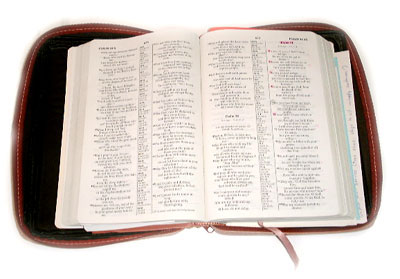 The fact that this guy is going to such lengths to sue Bible publishers for his "emotional pain and mental instability" apparently caused by the Bible, not only shows his own emotional instability and immaturity, but perhaps it also shows that he actually believes what the Bible says about homosexuality.
HT: James White
Tuesday, July 08, 2008
WHI on Pelagianism
Pelagianism, one of the greatest heretical scourges of the church for one and a half millenia, is the topic for the White Horse Inn this month.
There are some articles related to the Pelagian heresy such as Michael Horton's Pelagianism, and Gerald Bray's The Gospel According to Pelagius.
You can download the MP3 of the radio program this was discussed on, here.
There are some articles related to the Pelagian heresy such as Michael Horton's Pelagianism, and Gerald Bray's The Gospel According to Pelagius.
You can download the MP3 of the radio program this was discussed on, here.
Randy Alcorn on Mahaney and Piper's last Resolved sermons
Randy Alcorn, writer of non-fiction books such as Heaven, In Light of Eternity and Restoring Sexual Sanity, and fiction such as Deadline, Dominion and Deception, wrote a heart felt letter to C.J. Mahaney and John Piper thanking them for their last messages at the Resolved Conference.
Here is a snippet from Randy's letter:
Do yourself a favour and read the letter. When you're done reading the letter, then listen to the two messages he refers to in his letter.
C.J. Mahaney's message.
John Piper's message.
HT: Justin Taylor
Here is a snippet from Randy's letter:
I wanted to send this to the two of you in gratitude (mostly to God, secondarily to you) in particular for the final night of Resolved. I have been moved to tears and deep worship many times, but not in recent memory to the extent that I was Monday night.
Mark 15 and CJ’s “scream of the damned…for us” touched me at a profound level. The Holy Spirit spoke. And though I prayed and knew that John’s message would beautifully end the conference, I was not prepared for the way it happened.
Do yourself a favour and read the letter. When you're done reading the letter, then listen to the two messages he refers to in his letter.
C.J. Mahaney's message.
John Piper's message.
HT: Justin Taylor
Monday, July 07, 2008
Excellent Essential Reading Curriculum for Church Youth & Parents
TSHusker has provided an excellent essential reading curriculum for children and parents, starting at the Grade 1 level all the way up to Grade 12.
If parents can start with with their children from Grade 1 and keep it up all the way through Grade 12, those children will have an incredibly well-grounded theology and would have read some of the great classics.
HT: Justin Taylor
If parents can start with with their children from Grade 1 and keep it up all the way through Grade 12, those children will have an incredibly well-grounded theology and would have read some of the great classics.
HT: Justin Taylor
Subscribe to:
Posts (Atom)
