Showing posts with label Reviews. Show all posts

Thursday, July 22, 2010

Founder of SATS debunks Brian McLaren heresy

Dr. Christopher Peppler
Dr. Christopher Peppler wrote a very thought provoking, yet straight analysis of Brian McLaren's heretical book "A New Kind of Christianity: Ten Questions that are Transforming the Faith."

Dr. Peppler takes each of the ten questions that McLaren posed in his book and analyses them for truth and clarity. Peppler shows that while McLaren may have clarity in certain cases, that clarity has nothing to do with Scriptural truth, or at least does not contain the primary nature of the truth of the Scriptures and the gospel. In this blog post by Dr. Peppler, it is also shown how McLaren sets up straw men, just to knock down what does not exist!

In his conclusion, Dr. Peppler writes:
"It is good to ask questions and to seek deep and satisfying answers. It is reasonable to agonise over a Christianity that has so often presented itself as harsh, loveless, and power mad. It is evidence of a tender heart to wonder how a loving God could consign the bulk of humanity to eternal conscious torment. But, it is neither good or reasonable to attempt to recast the biblical narrative, redefine the nature of the Bible, and reformulate the principles of interpretation in order to create answers that the seeker finds acceptable. This is what I think Brian has attempted to do."

To read Dr. Peppler's accurate assessment of McLaren's book read his blog post here.

Saturday, April 03, 2010

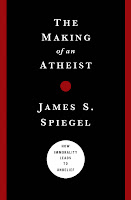
Book Review: The Making of an Atheist - Part 3

Making of an Atheist
Read Part 1 and Part 2 of this review.


4. The Obstinacy of Atheism

Dr. Spiegel starts this chapter using the movie The Sixth Sense as an analogy for the doctrine of original sin. It is the idea of being dead and not even knowing it. We all need a person like the boy, Cole Sear, to bring our deathly situation to our attention.

"Then, and only then, can we glimpse the truth about ourselves and--to break from the analogy of the film--experience spiritual resurrection." p90

In this chapter Dr. Spiegel aims to show how "a person may become locked in the atheistic delusion" through his worldview and the influence of sin on the mind.

Friday, April 02, 2010

Book Review: The Making of an Atheist - Part 2

Making of an Atheist
Read Part 1 of this review.


2. The Irrationality of Atheism

In this chapter Dr. Spiegel deals a fair amount with one of atheisms "leading champions of atheism" and his "conversion" to theism. Antony Flew.

"In this chapter we will look at the principal categories of evidence that persuaded Flew to become a theist, and we will see why any fair-minded person should be similarly convinced of the reality of God." p42

There were three evidences that moved Professor Flew from atheism to theism, and they were: "the laws of nature, the existence of the cosmos, and the presence of life." (p42) Nature's laws are very constant. The question is why? Scientists could formulize laws from the data they study, yet they cannot answer the question, "why?" Even though some scientists still deny God and believe that the laws of nature are as they are by necessity, "this only raises the 'why' question at a different level." (p43) What makes these laws necessary?

Thursday, April 01, 2010

Interview with Dr. Jim Spiegel author of The Making of an Atheist

Making of an AtheistFor those who have been following this blog, you would have been reading about The Making of an Atheist blog book tour.

It is my privilege today to interview Dr. Jim Spiegel on his book The Making of an Atheist.

1. Just thinking...: Hi Jim, welcome to Just thinking...!
Dr. Jim Spiegel: Thank you for this opportunity to share my thoughts with your readers.

2. JT: Tell us a little about yourself, where you grew up, your family and how you came to Taylor University.
DJS: I grew up in Michigan and Mississippi.  I did my undergraduate work in Biology at Belhaven College in Jackson, then went on to do graduate work in philosophy at University of Southern Mississippi and then back up north to Michigan State University for my doctorate.  I arrived at Taylor in 1993 and have been teaching there ever since.

Book Review: The Making of an Atheist - Part 1

Making of an Atheist
TITLE: The Making of an Atheist
SUBTITLE: How Immorality Leads to Unbelief
AUTHOR: James S. Spiegel
PUBLISHER: Moody Publishers, Chicago
YEAR: 2010
ISBN: 978-0-8024-7611-1
PAGES: 141 (including notes and acknowledgements)

Apologetics, especially in the face of blunt, dare I say "blind", atheism, is never
easy. The question of their "blindness" always intrigues me. How could they not see God's handiwork all across creation? How could any rational person believe the fairy tale of goo to the zoo to you? How could a thinking person deny that what so clearly looks like design is not design? If an alien (of the grey extra-terrestrial variety) lands on our moon, would their first thought really be, "I wonder how many million years it took for this flag to evolve on this moon?" (The flag mentioned here is the one that the Apollo 11 crew planted on the moon.) Why do these atheists not believe? Why are the New Atheists like Dawkins so acerbic towards any belief in God, especially Christianity?

Tuesday, March 23, 2010

The Making of an Atheist by Dr. Jim Spiegel book giveaway

Making of an AtheistIt is almost time for Just thinking... to post its review of Dr. Jim Spiegel's book, The Making of an Atheist. I will also have an interview with Dr. Spiegel. This will all happen from 1-3 April. I have already written the review in 3 parts and I am waiting on the answers to the interview questions that I posed to Dr. Spiegel.

As a bonus to you, the readers of this blog, Dr. Spiegel and his publishers have made 2 copies of this book available for a free giveaway. So, if you would like to win one of these books, please fill out the form below to be entered into the draw. The competition is valid until 30 March 2010, 18:00, South African time. That is 12:00 EST in the U.S. and 16:00 in London, midnight in Perth, and 05:00, 31 March in Auckland. That should make it understandable... I hope!

Only those names and emails entered via the form below will be considered!

UPDATE (30 March 2010):
The book giveaway has ended and the two winners have been chosen. They are:
Eric Loynes
Eleanor Poulter

I made use of Random.org to determine the two winners.

I have emailed them to inform them, and as soon as they have sent me their postal addresses, I will inform Dr. Jim Spiegel of their postal information.

Congratulations Eric and Eleanor!

Saturday, March 06, 2010

Do you have questions for Dr. Jim Spiegel on his new book, 'The Making of an Atheist?'

My turn for giving my review and interview of Dr. Jim Spiegel on his new book, The Making of an Atheist, during his blog book tour, will be 1-3 April here on my blog.
If anyone would like to ask him a question on his book, you could leave a comment to this post and I will make sure that he gets it. Make sure that I get your questions NO later than 23 March 2010.
Unfortunately my blog doesn't have comments links for all new posts on my blog's default page, since I started using intensedebate's comment code. They are working at it so I am hoping it will work real soon. However, if you click on the subject of this post you will be taken to this post's own page which would have the comment section at the bottom.

Monday, March 01, 2010

Finished reading "The Making of an Atheist" for the blog book tour with Dr. Jim Spiegel

Well, I have finished reading The Making of an Atheist by Dr. Jim Spiegel. As most of you know, I am part of a blog book tour by Dr. Spiegel. I can now start thinking about the review I will be writing on this book and the questions I would like to ask Dr. Spiegel in the bloggerview.

The review and interview will appear on this blog one month from today (1-3 April). To find out who is reviewing the book and interviewing Dr. Spiegel in the mean time, check out my post on the blog book tour.

Tuesday, February 23, 2010

"The Making of an Atheist" book has arrived

As you know, I will be part of a blog book tour involving Dr. Jim Spiegel's latest book, The Making of an Atheist. I explained how the blog book tour works at my previous post on this matter.
I must say, I was starting to worry, because up until yesterday, I had not received the book yet, and I am due to post my review of Dr. Spiegel's book and do an online interview with him by 1-3 April. I really didn't want to do a rushed job and so was concerned about the arrival of the book.

Well, I am glad to let you know, the book arrived today and I will start working through the book immediately. So, look out for my review and interview with Jim around 1 April.

I promise you, no April Fool's jokes!

Wednesday, February 17, 2010

Brian McLaren's A New Kind of 'Heretical' Christianity

I am not going to give a review of Brian McLaren's new book, A New Kind of Christianity: Ten Questions that are Reforming the Faith. The problem is not that these ten questions are actually reforming the faith, but that Brian McLaren is doing his darndest to transform the faith into the faith he has concocted in his own mind. The reason I will not be giving a review is that I have enough books to read already.

Anyway, Kevin DeYoung has started a multi-part review of the book with a blog post called Christianity and McLarenism. DeYoung writes:

Monday, February 15, 2010

"The Making of an Atheist" Blog Book Tour is now underway!


As I announced in my previous post about "The Making of an Atheist" Blog Book Tour, Dr. Jim Spiegel has reached out to several bloggers to be part of his Blog Book Tour to promote his new book, The Making of an Atheist.

The tour has started and it will be very enlightening to read each review/interview. Here is the complete schedule:

Friday, February 05, 2010

Making of an Atheist Blog Book Tour

Jim Spiegel, Professor of Philosophy and Religion at Taylor University has written a new book, The Making of an Atheist. In order to promote his book he will be doing a blog book tour in which his book will be reviewed and/or he will be interviewed by several bloggers from around the internet. Jim is a blogger himself and will announce the full schedule from his own blog as to when reviews and/or interviews will appear in the blogosphere. I am privileged to be one of the bloggers asked by Jim to be part of the blog tour for his book.

A preliminary blog book tour schedule has been made available to the bloggers, but these dates cannot be released yet since the participating bloggers must still agree with the schedule. As soon as the dates have been finalized I will make them available from my blog.

The following table contain the list of bloggers that will participate:

Blog NameBlogger
Cloud of WitnessesChris Reese
Apologetics.comRich Park
Truthbomb ApologeticsChad Gross
TriabloguePeter Pike
Mike
Austin's blog
Mike Austin
The Seventh SolaJoel Griffith
EPS BlogSteve Cowan
Doug Geivett's BlogDoug Geivett
Apologetics 315Brian Auten
Just thinking...William Dicks
Oversight of SoulsRay van Neste
Constructive CurmudgeonDoug Groothuis
A-TeamBlogRoger Overton

The blog book tour will start somewhere mid-February.

Tuesday, August 18, 2009

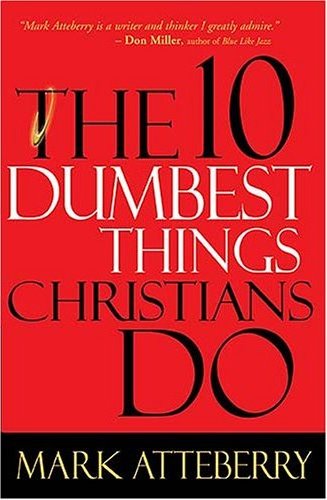
The 10 Dumbest Things Christians Do

"Gunny" Hartman, from SEMPER REFORMANDA, has been doing a series of blog posts on Mark Atteberry's book, The 10 Dumbest Things Christians Do.

Based on Gunny's review, I already like the book.

So, what are those 10 Dumbest Things Christians Do?
Gunny finished this series on 8 September 2009.

Mark Atteberry's book can be purchased here and here.

Tuesday, February 24, 2009

Decision Making and the Will of God - Part 8


When last I wrote in this series on the review of Friesen’s book, Decision Making and the Will of God, I truly thought that I was going to finish this series soon! How I was mistaken! Somehow I got distracted from this series and now it is more than one and a half years later! And, I have realised that a lot of the book must still be reviewed. I had finished reading it back then, but now I will have to do a bit of a refresher to continue this review.

Please accept my sincerest apologies for this delay!

Just a quick heads up on this book, I think that it is the best book on the issue of finding the will of God. It does not include pop-theology on the subject and is thoroughly exegeted to find what the Bible itself has to say on the subject.


Chapter 14, Guidance: A Biblical Model, starts with the following paragraph:
“So far we have seen that Scripture uses ‘God’s will’ in two ways: God’s sovereign will is His secret plan that works all things together for good. His moral will refers to all the commands in the Bible. On the other hand, we have set aside as scripturally invalid a third, commonly accepted concept—the individual will of God. As a result, we have discarded the idea that where the Bible does not command we must find another ‘will of God.’ Instead, we have shown that where there is no command, God provides freedom and wisdom to decide.” (p220)
This whole idea, the way of wisdom, that came before this chapter is very liberating in the sense that we no longer have to feel guilty when we haven’t heard the latest and greatest guidance from God. The pressure is off!

Biblical guidance is defined early in this chapter. Apart from describing Biblical guidance, Friesen demonstrates it in the life of the apostle Paul. Friesen sees four ways through which God guides His people. In Moral Guidance, God guides us through scriptural commands. Wisdom Guidance gives us freedom and wisdom where there are no scriptural commands. Sovereign Guidance are the secret works of God whereby He works all things together for the good of those that love Him. Finally, Special Guidance is rare, wherein God supernaturally reveals His ways to a specific person via His voice, angels, dreams and more.

Friesen uses Rom 1:8-13 to show how Paul planned his life. 1. Plans are appropriate (13), 2. Paul prayed about his plans for their accomplishment (8-10), 3. Paul submitted himself and his plans to God’s will (10), 4. Paul’s plans were based on spiritual goals, 5. Paul prioritised his spiritual goals.

Chapter 15 leads us into Special Guidance and Decision Making. Once again Friesen stresses the point that Special Guidance is rare. From here Friesen gives examples of Special Guidance through the Bible, such as the pillar of cloud, prophets, angelic voices and visions.

It is important to note that Friesen does not deny that God does speak to us in special ways at times. However, these times are very rare, and it comes sovereignly from God.

Friesen also answers the question surrounding so-called prophets today and so-called sensing the Lord speaking. He writes:
“Let me boldly state the obvious. If you are not sure whether you heard directly from God, you didn’t.” (p239)
I am also of the opinion that if God spoke you would know that He spoke. Friesen makes it clear that if we are left uncertain as to whether we really heard from God or not, it will simply be a guessing game.

Next, in Chapter 16, Making a Good Thing Better, Friesen deals with interpretive and application difficulties. He shows how the traditional view, that of seeking for a third will of God leads to great inconsistencies. Either you follow God’s leading through this method in all decisions of life, little ones included, or you are walking inconsistently with “God’s will.” Bad decisions can always be blamed on God and delays can be costly due to a person’s “waiting” on God.

The way of wisdom does not let someone hide his motives behind “God’s leading!” Further, the wisdom view teaches a person to grow up and to become decisive. While in the traditional view there can hardly ever be any certainty, within the wisdom view there is no such problem.

Chapter 17, A New Way of Seeing, shows how the same sources of information are before us whether we use the traditional view for guidance or whether we use the way of wisdom. Friesen explains that while the information for guidance remains the same, the two views approach the data quite differently. The traditional view looks for road signs pointing to God’s individual will, while the way of wisdom pursues a wise decision within God’s moral will.

Finally, we reach the last chapter, chapter 18, Practicing the Presence, of Part 3 of the book. Friesen writes:
“My contention is that equating our inner impressions with the voice of God is a misinterpretation of our experience. And the idea that the way of wisdom excludes God from our decision making is a caricature of what the Scriptures plainly teach.” (p270)
Friesen makes some suggestions about how a person that has become convinced of the way of wisdom can move from the traditional view to the way of wisdom.

Next Friesen suggests that because God is invisible, and He is God, our relationship with Him will be different from that of humans. However, we need to build a personal relationship with God.

Friesen explains how we build relationship with God as Trinity.

While the traditional method is always based on the premise that we need “to know what God wants us to do; God wants us to know Him.” (p285) God’s concern in our relationship with Him is less about what we do than with who we are.

So, we have come to the end of Part 3 with chapter 18. Next we will move into Part 4, Deciding the Big Ones: The Wisdom View Applied.

So, until next time, you could perhaps go back to the beginning of this series of the review of Friesen’s book.

Tuesday, February 10, 2009

“The Shack”: What shall we say about it?

Whenever people tell me they read a lot, I always try to find out what they read. What a person reads tells me a lot about them. Obviously, why a person reads what they read is also a dead give away. However, when there is a discernable pattern in the types of books read, then you can discover a lot about people. Further, a person's favourite authors also reveal a lot about that person.

Books are seldom just books. Most books, even novels, have a point to make. So, a book is hardly ever just for entertainment. Even these types of books, under further analysis, present us with some type of worldview or point of view about life.

Your point of view of The Shack will also tell me about you. In fact, my point of view of this book will tell you a lot about me too.
So, The Shack! Another review, huh! Yip! Another review! You might want to know why I am doing this review, since there are so many reviews on this book already.

Well, this is my blog and I can write what I want to, right? Actually, both the statement and the question can be answered in the affirmative. But, that is not why I write. In my small way, I think I can add some value to some soul out there. And, I hope I can do the same with this review, even if it says the same as another review.

Title: The Shack
Author: William P. Young
ISBN: 0-9647292-3-7
Publishers: Windblown Media, Newbury Park, CA.
Year of publication: 2007
Book URL: http://www.theshackbook.com

The story of The Shack is really a simple one, and it is easy to follow. Mack's (Mackenzie) daughter, Missy, was kidnapped and murdered while on vacation in the mountains. Missy's body was never found. This event has left Mack with what he calls, The Great Sadness. And indeed, the whole story revolves around Mack's sadness and how he deals with it.

Then one day, while clearing his driveway of snow he finds a note in his mailbox with the following words:
"Mackenzie,

It's been a while. I've missed you.

I'll be at the shack next weekend if you want to get together.
--Papa."
What is so disconcerting to Mack is that no one uses that term but his wife. And, it is her term of endearment for God. Without telling his wife what he is planning, he decides to go up to the shack to meet Papa. Of course, at first he thinks that it may be the killer that is messing around with his mind, and he then takes a gun with him.

The story then unfolds as he meets "god" at the shack in his "trinitarian" form. Through interaction with god over this weekend he comes to deal with his Great Sadness.

The book is a fairly good attempt at dealing with the question, "If there is a God, and He is supposedly good, then why is there so much evil in the world?"

The book flows well as a novel. I can't say that there was a time that I was really bored.

However, and this is the crux of the book, in its theology, the book seriously lacks in presenting a true Biblical picture of God.

One of the first things the book does is to doubt the current interpretation of Biblical doctrine. After receiving the note from Papa, he wonders about the note. According to Mack's own theological training at seminary, God simply did not send notes. God stopped speaking to mankind and we have to live off the pages of a book, "sacred Scripture, properly interpreted… God's voice had been reduced to paper" and only the "intelligentsia" knew the proper interpretation. (p65-66). This passage, and the belief that flows from it lays the foundation for the "revelation" of god later in the book. According to The Shack, and the deep sarcasm in this part of the book, there isn't just one interpretation of the Bible. No "properly interpreted" Scripture is necessary, for god reveals himself in other ways that may or may not coincide with our current beliefs about god. The whole book shows that Mack's seminary training, and its proper interpretation of Scripture could very much have a different meaning after all.

Finally, when god is revealed in the book, you can see why doubt had to be thrown on the "proper interpretation" of the Scriptures. Father God, called Papa, is a large black woman; Jesus, with the same name is a Jew, and the Holy Spirit, called Sarayu, is an Asian woman.

So, what is wrong with that? Well, simply put and to the point: God did NOT reveal Himself like that. What is revealed here is NOT the Trinitarian God of the Bible! God is never revealed in the Bible as a woman. God is revealed in male terms right through the Bible, and to say otherwise is to say what the Bible did NOT say!

Papa, the mother goddess in this book, is a hip-swinging, non-christian-music listening goddess. She actively listens to non-christian music. God certainly hears everything going on on this planet, but does He actively search out non-christian music to listen to on his iPod or MP3 player? Of course, thinking of God as male (as He has revealed Himself to us in the Bible), is "religious conditioning" (p93) according to Papa.

The book also drives the humanity of Jesus too far, portraying Him as a klutz. At one point in the book, they are all in the kitchen, and for some odd reason Jesus drops a large bowl with batter of some kind on the floor. (p104) Jesus is no longer in the normal state of humanity as He was on earth, with the limitations of a human body. Jesus was taken up into heaven with a glorified body, no longer having normal human limitations. To propose that He still drops things like a normal human being is simply nonsense. Jesus is God, and for Him to drop a bowl, would be to diminish His deity, therefore getting rid of His deity. In this same encounter Papa calls Jesus "greasy fingers" as if this would be a normal occurrence.

The Shack portrays all mankind as children of God, and that there is not one person that God is not especially fond of. Mankind only made a mess of things in this book, they didn't really rebel against the Most High God and as a result deserve eternal death and damnation. I suppose Papa did not know of verses like Ps 5:5 that speaks of God's hate for the wicked. According to Papa, mankind's anger at God "is an expression of love all the same. I love the ones I am angry with just as much as those I'm not." (p119). Well, does Papa come across as the Biblical God who judges and destroys those who hate Him? (Ex 20:5, Dt 5:9, Dt 7:10, Dt 32:41, Ps 21:8, Ps 68:1)

The treatment of sin in The Shack is very flimsy. In it, god doesn't "need to punish people for sin. Sin is its own punishment…" (p120) Papa needs to tell that to Adam and Eve. "Sin is its own punishment?" When Adam and Eve sinned, God actively judged them and punished them for that sin (Rom 5:16; Rom 2:2-5; Rom 6:3). God is the judge, and He will judge sinners in the end and they will go to hell. "Sin is [NOT] its own punishment!" A great and terrible punishment awaits sinners who have not been reconciled to God through Christ!

So, when it comes to the representation of God, and that which God has clearly spoken on in the Bible, the only verdict that I can come to is that this book contains undiluted heresy.

Young is portraying a complete perversion of God in his book. Once we touch who God is, and His very clear and precise revelation of Himself in the Bible, we distance ourselves from the God of the Bible and substitute in His place, a god made in our own image. Young's portrayal of God is in no way a reflection of the Biblical God. The god of The Shack is a figment of Young's imagination, a god that does not exist, certainly not the Trinity of true Christianity revealed in the Scriptures.

One of the most disconcerting issues of this book is how well known Christian personalities gush over this book. Michael W. Smith said: "THE SHACK will leave you craving for the presence of God." Which god would that be? The god made in man's image? In other words an idol!
"(3) You shall have no other gods before me. (4) You shall not make for yourself a carved image, or any likeness of anything that is in heaven above, or that is in the earth beneath, or that is in the water under the earth. (5) You shall not bow down to them or serve them, for I the LORD your God am a jealous God," (Exo 20:3-5 ESV)

The author of The Message paraphrase, note that it is NOT a translation, wants us to believe that this "book has the potential to do for our generation what John Bunyan's Pilgrim's Progress did for his. It's that good!" There is absolutely no comparison between Bunyan's clear Biblical portrayal of a Christian's walk until he leaves this world, and The Shack's heretical portrayal of God!

I think I will stop here. It is possible to write a book about the false and heretical teachings in The Shack. I simply do not have the time or energy to do that. However, I hope that everyone can see how serious the error is in this book.

For more commentary on this book, please read the following:
Revisiting The Shack and Universal Reconciliation
Series on The Shack at Herescope
Book Review by Dr. Scott Kaufman: The Shack

Monday, October 20, 2008

Another review of The Shack

Stephen Yuille wrote a very good review on the The Shack. In his review he writes:
"Whenever I get a book, I immediately glance at the recommendations. To be honest, I’m looking for names like Don Carson, J. I. Packer, R. C. Sproul, Sinclair Ferguson, John Piper, etc. – not because I think these men are infallible, but because I trust their discernment. Well, I didn’t find any recommendations from these men, but I did find one from Kathie Lee Gifford. You may think it’s unfair of me to say this, but I offer it for what it’s worth: a recommendation from Kathie Lee Gifford doesn’t instill confidence – not in me, anyway!...

"Young is unrelenting in his attempt to humanize God. In so doing, he crosses a line. Where is the awe and reverence? Where is the appeal to think great thoughts of God? Where is God’s glory and majesty? Where is God’s holiness? All of these things are trivialized by Young’s depiction of God triune as Elousia, Jesus, and Sarayu."

Continue the review here.

HT: Tim Challies

Update:
Gerald Hiestand also wrote a good review of the book:
"There are two fundamental difficulties I have with Young's 'anti-power”' motif. First, Young's portrayal of God is out of step with much of the way God is portrayed in Scripture. It's difficult to square Young's pacifistic Trinitarian portrayal with the God of Genesis 6, the Christ of Revelation 19, and the Holy Spirit of Acts 5. And it’s at this point that Young's theodicy falls short. The Scripture doesn't allow us to distance God from violence and coercion. The deeper question of theodicy is not simply how a good God can allow death and destruction, but how a good God can cause death and destruction. Young's book assumes the happiness of humanity is the highest good. The Bible does not affirm this."

Continue reading here.

Friday, August 08, 2008

The Shack: putting God in the dock

The book by William Young, The Shack, is selling like hot cake. Yet, is that a good thing?

Read this review by Gary Thomas.

Saturday, August 02, 2008

Worship Matters: A Review

When it comes to book reviews, you will soon realise that I am no professional book reviewer.

The book I am reviewing here is:
TITLE: Worship Matters: Leading Others to Encounter the Greatness of God
AUTHOR: Bob Kauflin
PUBLISHER: Crossway Books, Wheaton, Illinois
YEAR: 2008; first printing 2008.
ISBN-10: 1-58134-824-X
ISBN-13: 978-1-58134-824-8

After reading Bob's blog post Free Copy of Worship Matters for Twenty Bloggers, I decided to "apply" for this rare opportunity to read a book about worship from a Reformed-Charismatic perspective. I have read my share of worship books from the ordinary, run-of-the-mill, charismatic authors, but never one by a reformed worship leader. Well, Bob chose me as one of the reviewers for his new book, and I hope that I do his book justice.

Worship Matters is divided into four parts:
Part One: The Leader
Part Two: The Task
Part Three: Healthy Tensions
Part Four: Right Relationships

Throughout the book Bob gives practical examples from his own life and his ministry in worship. His examples do not only include the good stuff, but also point out how, in his own life, he at times messed up in his worship ministry, and how he, through the work of the Lord in his life, got things back on track.

What I do like about this book, is the fact that it is not a manual on how to get the people in the pews all hyped up so that they could feel like they are praising and worshipping God. Bob brings the concept of worship back to basics. For too long the modern church has made singing on Sundays the only barometer of a person's or a church's level of worship. Bob uses the Bible to show that singing is only a part of worship. Worship is far broader than that! Worship includes everything in our lives, from the time we wake up till the time we go back to sleep. True worship is doing all things to the glory of God. Worship is not really about getting, but about giving. Giving glory to God!

In Part One: The Leader, Bob handles everything about the worship leader. His heart, mind, hands and life. What does the worship leader love? Is it reputation, control, acclaim? Or does the worship leader love God? "Here's my sobering discovery. I learned that I could lead others in worshiping God and be worshiping something else in my own heart." p25.

Apart from the usual emphasis on the heart of the worship leader, Bob also puts emphasis on his mind. A worship leader must also look after his doctrine. "The better (i.e., the more accurately) we know God through his Word, the more genuine our worship will be. In fact, the moment we veer from what is true about God, we're engaging in idolatry." p28. A worship leader should be studying the Bible without making the mistake that it is an easy task to study the Bible. Yet, the Bible is the foundation of what we believe about God.

Bob moves on to the skill of the worship leader. Bob contrasts the two opposing ideas about skill in worship leaders. Some would like a worship leader to simply have the heart for the job, while others want the person to have the right skill. Both sides are relevant to leading worship. While skill will not make our worship more acceptable to God, it does help us to focus on God and to serve the church better. Skill should be developed, and that developed skill will benefit the church as well as the worship leader. Bob suggests a few areas in which skills need to be developed: leadership, musicianship, communication and technology.

Next, we look at the worship leader's life. What kind of life does he model? "In my experience, this is rarely the emphasis among worship leaders. Godly example is too often assumed or ignored, while public gifting is highlighted and exalted. But Paul can't imagine a leader whose personal life doesn't commend his message." p44. The worship leader should set an example, not just while leading the singing but also in all of life, speech, conduct, love, faith and purity.

In Part Two: The Task
, Bob answers the question, "So what does a worship leader do?" In chapter 6, with this same title, Bob builds up a working definition of a worship leader. He came up with the following:

A faithful worship leader
magnifies the greatness of God in Jesus Christ
through the power of the Holy Spirit
by skillfully combining God's Word with music,
thereby motivating the gathered church
to proclaim the gospel,
to cherish God's presence,
and to live for God's glory.


Then, to answer the question above, Bob unpacks this definition, line by line, phrase by phrase, into a further eleven chapters in Part Two.

I am not going to handle each of these chapters in this review, since the review will become a small book in itself. In starting to unpack his definition in chapter 7, A faithful worship leader..., Bob stresses the fact that a worship leader must be faithful in leading the congregation towards true worship. "If our leadership focuses on musical experiences, we'll reap a desire for better sounds, cooler progressions, and more creative arrangements. If we sow to immediate feelings, we'll reap meetings driven by the pursuit of emotional highs. If we lead in such a way that we're the center of attention, we'll reap a man-centered focus, shallow compliments, and ungodly comparisons." p60.

In worship, it is primarily God's greatness that must be emphasised. In worship we explore God's nature and His works. It is for this reason that theology is important in worship. In exploring God's greatness in worship, we need to be constantly reminded that Jesus Christ is our mediator. And,... Jesus is our mediator exactly because of His substitutionary death on the cross.

From this point Worship Matters takes us into the much disputed waters of the Holy Spirit. Even though chapter 10, ...through the power of the Holy Spirit..., is a short chapter, it is refreshing to see a reformed worship leader come forward with a solid explanation of our dependence on the Holy Spirit in worship. I think sometimes that reformed circles have an overbearing Christology, and not a solid enough doctrine of the Trinity that includes a strong Pneumatology. Bob Kauflin points us to that end.

Bob then lays down the crux of the matter in chapter 11, ...skillfully combining God's Word..., by saying, "Our churches can't be Spirit-led unless they're Word-fed." p89. This has been a theme right through Worship Matters. Our foundation for matters of faith and life, is the Bible. In order to ensure that our worship is Word-centered, we need to treasure God's Word, sing God's Word, read God's Word, show God's Word and pray God's Word.

Chapter 12 and 13 handle music in Sunday worship. This has been a hot potato for many years. Should we use contemporary worship songs or hymns? Bob sums this up by saying that "being emotionally affected by music and actually worshiping God aren't the same thing..." p97. Music can affect us in all kinds of settings, yet most of those settings cannot remotely be called worship. These are very practical chapters. It explains how music helps us, how music should serve the lyrics, and how music should display variety. Chapter 13 is practical in the sense that it helps us plan Sunday's songs.

Chapter 14 deals with the worship leader and how he motivates the church to worship. Worship cannot be demanded by the worship leader. He can only encourage and motivate. There are 3 ways worship leaders should not handle this. Don't demand worship. Don't manipulate people into worship. Don't project false guilt onto the church.

In chapter 15 we discover one of the main reasons for worship. "...to proclaim the gospel..." As Bob explains, "Biblical worship involves proclamation and leads to proclaiming truth with our lives. We're doing more than emoting or having 'worship experience.' We're declaring why God is so great, what he has accomplished, and all that he has promised. We all need to be reminded, and proclamation helps us remember." p129. This chapter is very central to the book, since one of the premises by the book is that worship depends on the proclamation of the truth. The gospel is central to Christian truth and therefore cannot be divorced from true Christian worship.

The worship leader must teach the church and model the idea of cherishing God's presence (chapter 16) and living for God's glory (chapter 17). In chapter 17 we read that worship should "make us humble," "make us secure," "make us grateful," "make us holy," "make us loving," "make us mission-minded" and change our lives.

Part Three: Healthy Tensions has 10 chapters. In life we continually deal with false opposites. Take the last sunset you saw. A false opposite would be to ask "Was it a beautiful sunset or was it just the sun's rays interacting with the atmosphere and dust particles that made it look that way?" This is the wrong question! It doesn't matter why the sunset looked beautiful. Just because someone can explain why the sunset looks like it does, does not mean that it is not beautiful anymore. Why do we have to choose between beauty and science in this case? Surely there are other alternatives. In the same way, there are certain tensions in worship leading that sometimes seem at odds with one another. However, they are not opposing tensions, they are complimentary tensions.

Tensions such as God's transcendence or immanence. Is worship an issue of the head or the heart? Is worship about the internal or the external? Is worship a vertical or horizontal matter? Should our worship be planned or spontaneous? Should our worship be rooted in history or should it be relevant? Should it be skilled or authentic? Should it be geared towards believers or unbelievers? Should worship be an event (Sundays) or is it for everyday? These are all questions that are skillfully answered in the 10 chapters that make up part 3. Bob writes, "With deep respect for those who've gone before us, in our church we attempt to follow three principles for ordering our services:
1. Do what God clearly demands.
2. Don't do what God clearly forbids.
3. Use scriptural wisdom for everything else.
We recognize that God hasn't given us a prescribed order of service that defines biblical worship. But we seek to faithfully apply biblical precepts and examples." p155.

Part Four: Rights Relationships, deals with the relationship of the worship leader with people in general, the church, the worship team and the pastor. Worship is not just about leading songs. It includes how we treat others, and that is just as important to God as our songs of praise are to Him. Worship leaders should not just love leading people in song, they should also love the people they lead in song.

A worship leader has to handle the people in his church with wisdom and love. How does a worship leader handle encouragement, correction or criticism from those in his church? These types of issues are handled in chapter 29. I appreciate how Bob even brings this subject back to the cross. How do we respond to criticism? Why do worship leaders resent criticism? Bob answers, "I don't believe what God has said about me in the cross. I think there must be some aspect of my life, however small or pitiful, that's praiseworthy meritorious, and beyond inspection." p223. Compliments and criticisms can be for the same type of elements in worship leading. Song choice, musical arrangements, length of the singing time, etc. If we are complimented, do we become proud, or when we are criticised, do we become defensive?

Chapter 30 deals with the worship team itself. It deals especially with the establishment of the team. Roles, standards, and commitment are discussed. It also handles the equipping of the team which includes areas such as theological growth, musical growth and rehearsals.

Chapter 31, Your Pastor, handles the often sticky relationship with the pastor. Many times worship leaders think that they perform a more essential service to the church than the pastor does. Yet, it is brought to our attention quite clearly that worship leaders serve as those under authority. A worship leader needs to listen to his pastor. This is where he will find out what the pastor prefers. How are disagreements to be handled between the pastor and worship leader?

The final chapter is a chapter written for the pastor. The book was written primarily for worship leaders, but in this last chapter, the pastor is addressed essentially as the one with overall oversight, even of worship. Here a pastor can learn what to look for in a worship leader. Qualities such as humility, Godly character, love for good theology, a gift for leadership and musical skill.

In conclusion, I appreciated Bob's constant pointing to the essentials. Not just essentials for worship leaders, but essentials of the gospel. The reminder is to have a good theology in front of us to remind us of the truth of God, in order for us to worship God truly. This book is a must read for every worship leader and pastor. It once again reminds us that worship leading is not just a repetition of songs, but the declaration of the gospel and wondrous acts of God in the midst of His people. God, and God alone deserves the glory!

Monday, May 05, 2008

Phil Johnson reviews "Why We're Not Emergent"

Well, here is a book I am going to buy! After reading Phil Johnson's review of Kevin DeYoung's and Ted Kluck's Why We're Not Emergent: By Two Guys Who Should Be, (available at Amazon and Kalahari), I will be getting this one.

Here is a short excerpt:
"In fact, I think I said wow at least once in every chapter of this book. No matter how little or how much you know about postmodernism and the emerging church, you will find this book informative and thought-provoking. I'm pretty sure I have read more material on both sides of this issue and spent more hours thinking critically about it than the average evangelical lay person. But I found myself repeatedly being challenged with new facts, fresh ideas, and arguments I hadn't considered before. I gained a clearer perspective even on some of the very aspects of Emergent thought that are most familiar to me.

"The book rings all the right notes, at just the right tempo."

Wednesday, April 16, 2008

ESV Study Bible!

The ESV Study Bible now has its own website!

From what I have read about it at the website, it seems that this will probably be the best study Bible on the market! Looking at the editors and contributors already sets the ESV Study Bible above the rest. Some names of note are: Wayne Grudem, J.I. Packer, Justin Taylor, Andreas J. Köstenberger, Vern Poythress, Leland Ryken, David Powlison, John Piper, Kent Hughes, Mark Dever, Daniel B. Wallace, David Alan Black, Bruce Ware and others.

Here are some endorsements for the ESV Study Bible:
"'Outstanding! The ESV Study Bible is a treasure—a beautiful volume, filled with a wealth of resources. It will be just as useful for the seminarian and long-time pastor as it will be accessible to the brand-new Christian.'
R. Albert Mohler Jr., President, The Southern Baptist Theological Seminary"

"'Like the ESV itself, this Study Bible sets a new standard in excellence. The craftsmanship invested in every page—from the insightful articles and informative notes to the crisp design and gorgeous illustrations—makes it an invaluable tool for students of God’s Word. As a pastor it’s my goal to get one into the hands of every member of my church.'
Joshua Harris, Senior Pastor, Covenant Life Church"

"'The definitive clarity and beauty of the ESV Study Bible is extraordinary. In a world where words are distorted to mean anything, it is wonderful to have complete confidence in the reliability and truth of the Bible—so clearly and persuasively demonstrated by this world-class team of Bible scholars and teachers. For everyone who wants to understand God’s word in a deeper way, the ESV Study Bible is an outstanding resource. I will be an avid user!'
Joni Eareckson Tada, Founder of the JAF International Disability Center"

As for me, I will definitely get myself the ESV Study Bible.

However, there is a downside to the ESV Study Bible... it will only be available October 2008!!

HT: Justin Taylor

Update
21 April 2008 - For those living in South Africa, you can pre-order your new ESV Study Bible from Kalahari.net! Also, check out all the blogs that have written about the new ESV Study Bible! I am number 81. I am famous!
Of course, if Crossway would find it in their generous hearts to give me a free copy (leather bound of course), I would write them a proper review of the ESVSB! Let's pray!

Related Posts Widget for Blogs by LinkWithin